
Journal
Storage that disappears
21 August 2026 · 4 min read
By Claire Wickstead, Interior Designer
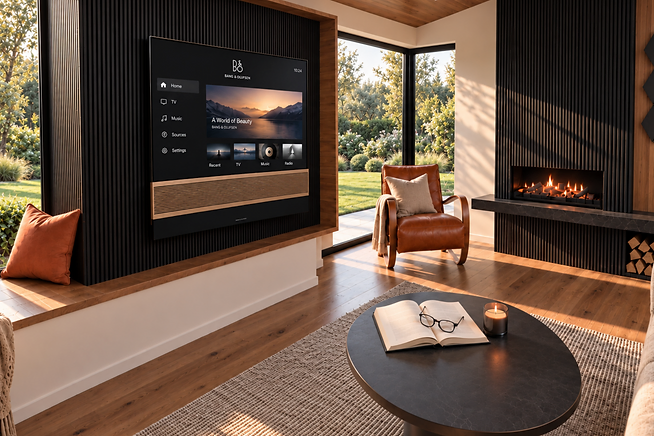
There is a moment in almost every project where the client apologises for how much stuff they have. They never need to. A home without possessions is not a home; a home where every possession is visible is not calm. The answer is almost never to own less, but to store better.
Bespoke joinery earns its place by fitting what a room actually needs to hide. A window seat with a lift-up lid holds the throws and board games. A plinth drawer under a run of cabinetry takes the things that have no other home. A full-height wall that looks like paneling is, in truth, a cloakroom, a vacuum store, and the Christmas decorations, all behind one continuous facade.
Design the closed storage first
The mistake we see most often is open shelving designed before closed storage. Open shelves look generous in a photograph and demanding in a household: every object on them has to be arranged, and then rearranged after every busy week. We plan the closed volumes first, generously, and only then decide what deserves to be on show.
The other lesson is proportion. Joinery should read as architecture, not furniture — running to the ceiling, aligned with the room's openings, finished in the same tone as the walls so it recedes. Done well, the room does not feel like it has more cupboards. It feels like it has less of everything else.
That is the real luxury of bespoke storage: not the craft, though we love the craft. It is that the room is left holding only the things you chose to look at, and nothing you didn't.